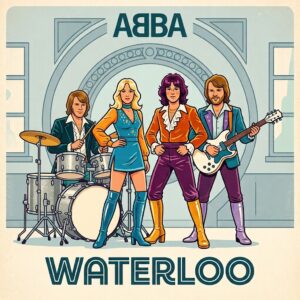
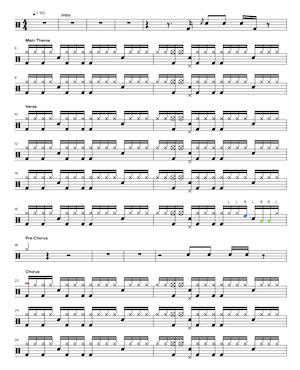
This drum sheet is recommended for early intermediate to advanced drummers looking to develop upbeat groove stamina, dynamic hi-hat pedal control, and tight kick-snare coordination. It is an ideal study for players wanting to master high-tempo pop-rock arrangements, as well as working drummers who need an accurate, reliable, and gig-ready transcription of this famous 1970s Eurovision track for live cover band performances.
Learn to play waterloo on drums
Play Waterloo drum cover with our interactive drum sheet and synchronized drum notation player. Follow every rhythmic shift in real time as the notation moves with the music, slow down challenging sections using tempo control, and isolate drums to analyze Ola Brunkert's energetic backbeat and syncopated kick patterns. Use looping sections to rehearse the fast transitions into the chorus until the changes feel completely natural. Practicing this track builds your four-on-the-floor foot independence and refines upbeat hi-hat coordination at an aggressive tempo. Step behind the kit, fire up the interactive player, and master this classic pop-rock groove with total confidence.
Song information
Artist: ABBA
Drummer: Ola Brunkert
Album: Waterloo
Released: 1974
Sheet Music Details
Length
3 pages of highly readable, clean drum score layouts.
Tempo
140-149
Time Signature
4/4
Key features
Driving uptempo glam-pop groove, syncopated kick drum patterns, dynamic hi-hat pedal articulation, punchy snare backbeats, and tight transitional tom fills executed at a brisk tempo.
Song's Overview
Released in 1974 as the title track of ABBA's second studio album, Waterloo transformed European pop by infusing it with raw glam-rock energy. Built around an infectious, uptempo rhythm, the song departed from gentle balladry in favor of driving guitars, soaring vocal arrangements, and an assertive drum performance.
For drummers, Waterloo presents an inspiring study in how energetic pop-rock drumming can elevate a song's momentum. Session drummer Ola Brunkert laid down a dynamic foundation driven by steady eighth notes on the hi-hat, punchy snare backbeats, and subtle syncopated bass drum figures that push the groove forward. When you learn Waterloo on drums, you discover how much drive and articulation are required to maintain its high-spirited pulse without speeding up.
Studying a Waterloo drum cover reveals how Brunkert utilized accent placement and crisp tom transitions to propel the arrangement from the punchy verses into the explosive chorus hooks. Mastering this Waterloo drum sheet helps players grasp the importance of dynamic balance, physical endurance, and pocket precision in an upbeat commercial context, showing how thoughtful drumming creates unforgettable musical impact.
Ola Brunkert stands as one of the most prolific session players in pop history, best known as the rhythmic engine behind ABBA’s defining global hits. Cut from the Swedish jazz and blues scenes, his background gave him a fluid touch and an unshakable internal clock that top producers relied on for decades. Analyzing his discography is a premier way to improve your drum skills, especially for players looking to master tight studio dynamics and clean execution. If your goal is to play better on drums across radio-friendly genres, studying Brunkert’s work provides clear blueprints for pocket playing and musical restraint. Setting up to record an accurate ABBA drum cover remains an essential rite of passage for drummers seeking genuine groove mastery.
Drumming Style
Brunkert’s drumming is defined by laser-focused timekeeping, punchy kick-drum placement, and subtle, musical hi-hat articulation. He favored organic momentum over rigid mechanics, locking seamlessly with the bassline to give classic disco and pop tracks their infectious forward drive. Breaking down his phrasing will immediately push you to play better on drums, particularly when handling uptempo four-on-the-floor patterns and syncopated grooves. Every fill was intentional and lean, designed to launch the next vocal hook rather than steal the spotlight. Replicating that crisp, centered backbeat in a modern drum cover forces you to focus on note value, balance, and consistent stick velocity. Digging into his classic tracks offers practical drills to improve your drum skills and command the kit with studio-grade authority.
Practice Advice
01
Start at a Moderate Tempo
Waterloo moves at a brisk tempo of nearly 148 BPM. Begin practicing at 115–120 BPM to internalize the syncopated bass drum placements against the hi-hat pulse. Practicing slowly ensures your kick and snare remain tightly synchronized before increasing speed toward the original recording.
02
Loop the Chorus Transitions
The transitions connecting the verses to the choruses feature quick push accents and crash downbeats. Use looping mode to isolate these transition bars, repeating them until you can smoothly move from tight verse patterns into wide-open chorus grooves without dropping your tempo.
03
Avoid Rushing Snare Fills
A common pitfall is rushing the short sixteenth-note fills leading into new sections. Ola Brunkert plays with controlled momentum rather than frantic speed. Focus on relaxed wrist motion and subdivisions, ensuring each stroke lands squarely in time with the metronome.
04
Lock With the Bassline
The song's infectious drive relies on tight cohesion between the bass drum and the walking bass guitar line. Concentrate on locking your kick strokes directly onto the bass notes, creating a punchy rhythmic anchor that drives the song cleanly without dragging or rushing.
05
Master Hi-Hat Pedal Control
The groove alternates between crisp, closed hi-hat strokes in the verses and slightly open, sloshy textures during the chorus. Practice feathering your hi-hat foot pressure to control cymbal wash, ensuring the open sound enhances energy without overpowering the main snare backbeats.
Learning Roadmap
Phase 1: Internalize the Core Verse Groove
Isolate the foundational eighth-note hi-hat pulse and syncopated kick pattern. Focus on foot independence while maintaining a steady snare backbeat on beats two and four at 115 BPM, establishing solid limb separation before speeding up.
Phase 2: Master Dynamic Chorus Transitions
Learn the open hi-hat textures and driving cymbal downbeats that define the chorus. Practice navigating the transitions between closed and open cymbal sounds, locking in the push accents that propel the arrangement into each vocal hook.
Phase 3: Refine Fills and Articulations
Work through the short tom fills and snare pickups. Concentrate on sticking accuracy and clean rebound control, ensuring each transition enters and exits cleanly without rushing the subdivisions or disrupting the overall pocket.
Phase 4: Build Stamina for Full Performance
Play through the entire track from start to finish. Focus on maintaining physical relaxation and consistent dynamic contrast across the fast 148 BPM tempo, ensuring the groove remains energetic and steady through the final outro.
FAQ
Is waterloo suitable for beginners?
It’s more suited for beginners with some experience. Using features like tempo control and looping can help you learn it at your own pace.
Can I learn waterloo if I’m not very confident reading drum notation?
Yes — our interactive player makes it much easier. You can watch, listen, slow things down, and gradually get familiar with the notation as you play.
Do I need a full drum kit to play waterloo?
No — you don’t need a full drum kit to play waterloo. A basic setup (kick, snare, hi-hat) is enough to get started.
How will learning waterloo improve my drumming skills?
By learning waterloo, you’ll work on coordination between your hands and feet, as well as transitions between grooves and fills.
What skills do I need before learning waterloo?
Before learning waterloo, it helps to be comfortable with basic grooves, simple fills, and maintaining steady timing.