

No Surprises

No Surprises
Drum Sheet Music

Practice Radiohead on Drums

Intermediate

See How Drummer Tube Helps You Learn Songs Faster

Want access to all lessons?

View Plans >> Unlock this song – $7.90

Learn to Play No Surprises Faster With Pro Interactive Drum Player

Play Sample Song For Free

Master This Song

$7.90

Original + Simplified

  • Download both versions as drum sheet PDFs
  • Play along with both versions in the interactive player for 2 months
Buy This Song

One-time payment · No subscription

Original
Simplified

Choose your Drum Sheet Version

Two versions of the drum sheet - choose the one that fits your level and goals.

ORIGINAL VERSION
Difficulty Level:
Intermediate
  • Exactly as played on the original recording
  • All fills & ghost notes
  • Full arrangement
SIMPLIFIED VERSION
Difficulty Level:
Easy
  • Easier to learn
  • Simplified fills
  • Reduced ghost notes
  • Perfect for beginners & intermediates

Not sure which version?

We recommend starting with the Simplified Version and moving to the Original Version once you're comfortable with the groove and structure.

Unlock all songs library and practice like a pro:

$10 / month

Billed at $120 per year

  • 7-day free trial
  • Full access to all songs
  • Interactive player
  • Downloadable drum sheets
  • Full support
  • Cancel anytime
  • 30-day money-back guarantee

$15 / month

Billed at $15 per month

  • Full access to all songs
  • Interactive player
  • Downloadable drum sheets
  • Full support
  • Cancel anytime

Drumming Techniques You'll Learn in No Surprises

  • Low Dynamic Hi-Hat Articulation
  • Understated Kick and Snare Balance
  • Consistent Slow-Tempo Pocket Control
  • Subtle Micro-Timing and Dynamics
  • Minimalist Fill Execution and Restraint

Recommended For

This drum sheet is recommended for beginner and intermediate drummers seeking to build low-volume dynamic sensitivity, slow-tempo stability, and disciplined pocket control. It is particularly valuable for drummers focusing on ballad playing and alternative rock who want to refine their internal clock, master subtle hi-hat touch, and learn how to support a complete musical arrangement with confidence, restraint, and absolute precision.

Learn to play No Surprises on drums

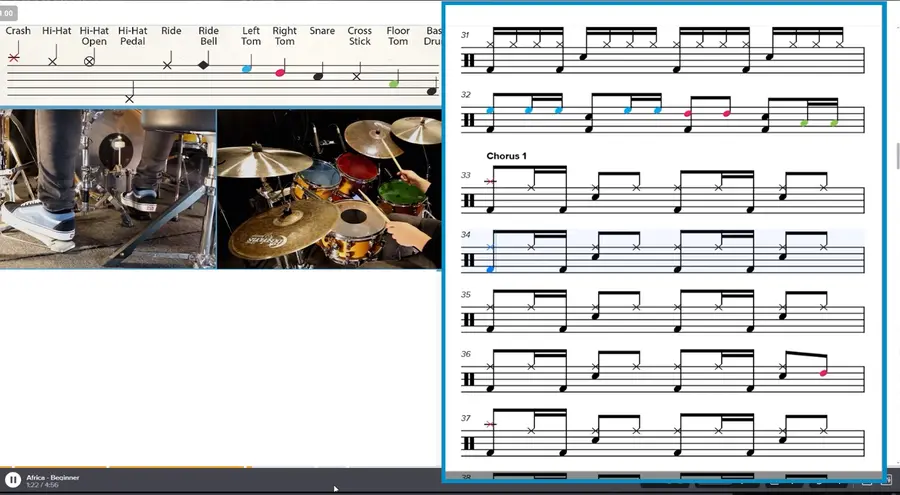
Play No Surprises drum cover with our interactive drum sheet and synchronized video player. Follow every note in real time as the notation moves with the music, slow down challenging sections with tempo control, loop delicate grooves until they feel natural, and isolate the drum track to hear every detail of Philip Selway's refined performance. Whether you are developing dynamic touch, mastering understated ballad feel, or building timing consistency, our step-by-step learning tools make mastering this Radiohead classic faster, easier, and far more effective than practicing from a static PDF alone.

Song information

Artist: Radiohead

Drummer: Philip Selway

Album: OK Computer

Released: 1997

Sheet Music Details

Length

2 pages of clean drum score layouts

Tempo

74-78

Time Signature

4/4

Key features

Features a delicate 4/4 ballad groove, subtle hi-hat dynamics, understated kick drum placement, clean snare backbeats, and minimalist transitions requiring steady micro-timing control at low volume.

Song's Overview

Released in 1997 on Radiohead's groundbreaking album OK Computer, No Surprises stands out for its lullaby-like melody and haunting atmosphere. While the song is renowned for its delicate acoustic guitar and glockenspiel motif, the drumming provides an essential, steady foundation that grounds the melancholy arrangement without ever overpowering it. To learn No Surprises on drums requires an understanding of subtlety and dynamic control. Philip Selway plays a minimalist pattern that emphasizes steady micro-timing and a light, balanced touch. Rather than drawing attention with complex fills, the performance relies on subtle hi-hat accents and consistent kick drum placement to maintain a gentle pulse across every section. Studying a No Surprises drum sheet reveals how much impact a drum part can achieve through simplicity and emotional awareness. Working on a No Surprises drum cover offers drummers a valuable lesson in serving the song, mastering low-volume control, and playing with total rhythmic clarity.

See How Drummer Tube Helps You Learn Songs Faster

Want access to all lessons?

View Plans >> Unlock this song – $7.90

About the Drummer

Philip Selway is an English musician best known as the longtime drummer for the alternative rock band Radiohead. Celebrated for his extraordinary restraint, rock-solid timekeeping, and adaptability, Selway has been an integral part of Radiohead's sonic evolution from 1990s guitar rock to experimental electronic art music. His distinctively disciplined approach prioritizes song texture and atmospheric space over flashy displays. Beyond Radiohead, Selway has built an acclaimed career as a solo singer-songwriter and film composer, showcasing his deep versatility across musical genres.

Drumming Style

Philip Selway’s drumming style is defined by precision, subtlety, and deep musicality. Often referred to as a human metronome, he possesses exceptional timing and consistency, allowing him to hold down hypnotic grooves while the band explores complex textures and time signatures. Selway seamlessly blends organic acoustic drumming with programmed electronic elements, particularly on Radiohead’s ground-breaking experimental albums. Rather than overplaying, his groove choices focus on microscopic details—nuanced hi-hat work, gentle ghost notes, and precise dynamic control. Whether driving a high-energy art-rock epic or underpinning a stripped-back ballad, Selway always places the emotional core of the song above individual technical display.

Practice Advice

01
Maintain Metronome Stability at Slow Tempos
Practicing at 76 BPM requires deep rhythmic focus because slow tempos leave more space between notes. Set your metronome to quarter notes or eighth notes, focusing on landing every hi-hat note with relaxed, predictable accuracy without rushing into the snare backbeat.
02
Loop Chorus and Verse Transitions
Use loop mode to repeat the smooth transitions between the verses and choruses. Focus on keeping your hi-hat velocity steady across section changes so the subtle shift in intensity feels entirely seamless and natural without disrupting the overall pulse of the track.
03
Avoid Overplaying and Heavy Accents
A frequent mistake drummers make is playing the snare backbeat too loudly or adding unscripted fills. Philip Selway's groove relies on restraint. Keep your stroke height low and let the kick drum and snare blend softly into the mix.
04
Lock In Hi-Hat Consistency
Focus on creating an even, smooth texture with your hi-hat foot pressure and stick touch. Consistent eighth-note volume prevents the groove from sounding rigid, allowing the gentle pocket to feel natural and supportive throughout the song.
05
Master Low Dynamic Touch and Control
Controlling stroke velocity at low volumes takes physical discipline. Practice playing the main pattern as quietly as possible while maintaining full rhythmic clarity. Ensure your kick drum strokes remain controlled so they do not overpower the light snare hits.

Learning Roadmap

Phase 1: Internalize the Core Ballad Groove

Start by learning the foundational 4/4 drum pattern slowly. Focus on achieving a steady eighth-note feel on the hi-hat while placing the kick and snare with relaxed precision. Ensure your stroke heights remain consistently low throughout.

Phase 2: Refine Hi-Hat and Dynamics Control

Focus on hi-hat touch and dynamic balance. Work on keeping the hi-hat velocity even while softening the snare backbeat and kick drum strikes, training your limbs to control volume without compromising timing accuracy.

Phase 3: Master Subtle Section Transitions

Practice navigating the subtle transitions between the verse, chorus, and bridge. Pay close attention to small fills and crash entry points, ensuring you transition cleanly without rushing the tempo or altering your dynamic level.

Phase 4: Perform the Complete Track Fluidly

Play along with the full song from start to finish. Focus on maintaining steady physical relaxation, flawless timing, and consistent dynamic restraint across the entire track until the final fade-out.

FAQ

What is the tempo of No Surprises by Radiohead?

The original studio recording of No Surprises by Radiohead is played at a tempo of 76 BPM in 4/4 time.

Who played drums on No Surprises?

Philip Selway played drums on the original studio recording of No Surprises for Radiohead's 1997 album OK Computer.

Is No Surprises suitable for beginner drummers?

Yes, No Surprises is great for beginners and intermediate drummers because it features a straightforward beat, allowing players to focus on timing, relaxation, and dynamic touch.

What is the main drumming challenge in No Surprises?

The biggest challenge in No Surprises is maintaining consistent timing and delicate dynamic control at a slow tempo without overplaying or speeding up.

What drum equipment or sticks work best for playing No Surprises?

Lighter drumsticks, such as 7A sticks or rods, can help drummers achieve the soft dynamic control and delicate hi-hat tone heard on the studio recording.

Related songs

Pro Practice Feature

Still figuring this song out on your own?

Learn this drum cover faster with our interactive player:

Used by +1,000 drummers worldwide

Registr to start your Week Free Trial