Hey Jude

Hey Jude
Drum Sheet Music

Practice The Beatles on Drums

Intermediate

See How Drummer Tube Helps You Learn Songs Faster

Want access to all lessons?

View Plans >> Unlock this song – $7.90

Learn to Play Hey Jude Faster With Pro Interactive Drum Player

Play Sample Song For Free

Master This Song

$7.90

Original + Simplified

  • Download both versions as drum sheet PDFs
  • Play along with both versions in the interactive player for 2 months
Buy This Song

One-time payment · No subscription

Original
Simplified

Choose your Drum Sheet Version

Two versions of the drum sheet - choose the one that fits your level and goals.

ORIGINAL VERSION
Difficulty Level:
Intermediate
  • Exactly as played on the original recording
  • All fills & ghost notes
  • Full arrangement
SIMPLIFIED VERSION
Difficulty Level:
Easy
  • Easier to learn
  • Simplified fills
  • Reduced ghost notes
  • Perfect for beginners & intermediates

Not sure which version?

We recommend starting with the Simplified Version and moving to the Original Version once you're comfortable with the groove and structure.

Unlock all songs library and practice like a pro:

$10 / month

Billed at $120 per year

  • 7-day free trial
  • Full access to all songs
  • Interactive player
  • Downloadable drum sheets
  • Full support
  • Cancel anytime
  • 30-day money-back guarantee

$15 / month

Billed at $15 per month

  • Full access to all songs
  • Interactive player
  • Downloadable drum sheets
  • Full support
  • Cancel anytime

Drumming Techniques You'll Learn in Hey Jude

  • Late Entry Timing Precision
  • Slow Tempo Pocket Control
  • Expressive Tom Phrasing Accuracy
  • Macro Dynamic Scaling Development
  • Extended Outro Groove Endurance

Recommended For

This drum sheet is recommended for intermediate drummers looking to strengthen slow tempo pocket control, dynamic scaling, and timing precision. It is exceptionally valuable for players wanting to master late transitions and expressive tom phrasing, while learning to support an extended arrangement with absolute metronomic stability, restraint, and confidence.

Learn to play Hey Jude on drums

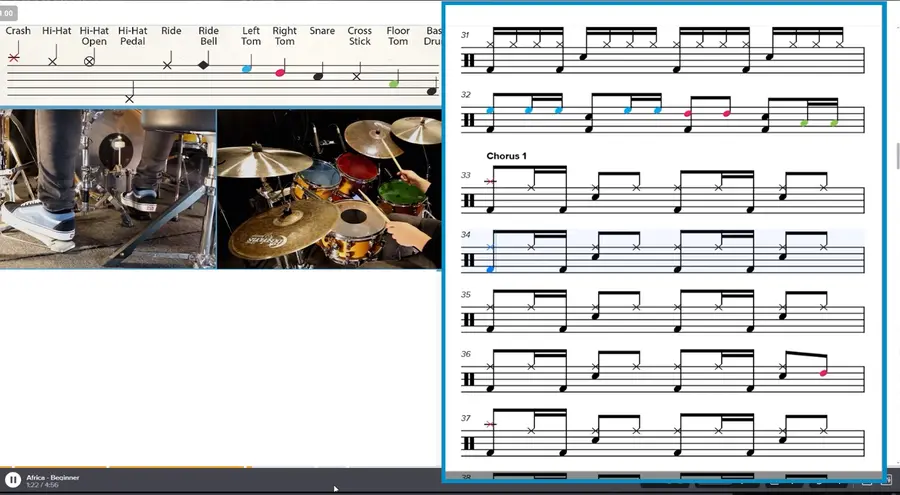
Play Hey Jude drum cover with our interactive drum sheet and synchronized video player. Follow every note in real time as the synchronized drum notation moves with the music, slow down the long, building outro with tempo control, loop the intense fill transitions until they feel entirely natural, and isolate the drum track to hear every detail of Ringo Starr's precise acoustic performance. Whether you're mastering late-entry timing precision or developing slow-tempo groove control, our step-by-step learning tools make mastering this song faster, easier, and far more effective than practicing from a static PDF alone. Grab your drumsticks and elevate your pocket today!

Song information

Artist: The Beatles

Drummer: Ringo Starr

Album: Hey Jude

Released: 1968

Sheet Music Details

Length

3 pages of highly readable, clean drum score layouts.

Tempo

70-79

Time Signature

2/4

Key features

Features a famous late entry transition, a slow-tempo ballad pocket, an extended building outro coda, expressive syncopated tom-tom sweeps, and precise dynamic volume changes requiring excellent structural awareness and metronomic restraint.

Song's Overview

Released in 1968, this track expanded the boundaries of popular rock arrangements with its unprecedented seven-minute duration and massive orchestral coda. The music relies heavily on a slow, deliberate development of musical layers, moving from an intimate piano ballad into an expansive, communal sing-along. For players who want to learn hey jude on drums, the arrangement offers a masterclass in patient accompaniment and late-entry orchestration. Ringo Starr famously sits out the first few minutes of the song, entering precisely during the fourth verse. This late entrance requires the drummer to immediately establish a firm, unhurried pocket without rushing the existing momentum. The core drumming consists of a steady eighth-note pattern on the cymbals paired with a deep snare backbeat and distinct syncopated fills that signal shifts in the structure. During the massive outro, the performance transitions into a driving, high-energy rock groove featuring punchy tom accents and open hi-hat washes that support the layered horns and vocal chants. Studying an authentic hey jude drum sheet allows intermediate drummers to analyze how minimal variations can drive a long arrangement without becoming repetitive. Working through a hey jude drum cover teaches musicians how to control macro-dynamics and master the art of rhythmic restraint.

See How Drummer Tube Helps You Learn Songs Faster

Want access to all lessons?

View Plans >> Unlock this song – $7.90

About the Drummer

Ringo Starr (born Richard Starkey) is the legendary drummer for The Beatles and one of the most influential figures in popular music. Joining the group in 1962, his inventive rhythm patterns, rock-solid timing, and focus on supporting the melody defined modern pop and rock drum kit performance. Being naturally left-handed while playing a right-handed kit gave his movement across the drums a signature, unrepeatable flavor. Starr transformed the role of the rock drummer from simple timekeeper to an integral compositional partner, fundamentally shaping how drums are arranged and recorded.

Drumming Style

Ringo Starr's drumming style prioritizes song arrangement, feel, and tonal color over technical bravado. Naturally left-handed, he plays a standard right-handed setup, which causes him to lead fills with his left hand. This approach produces unique movement across the toms and distinct rhythm placements. Starr pioneered the "sloshy" or half-open hi-hat technique, creating a wide, driving background texture that propelled mid-60s rock tracks. His timekeeping is exceptionally steady, allowing him to lay down deep grooves without rushing. Rather than playing repetitive standard beats, Starr treated every song individually, designing memorable drum hooks that complement vocal melodies.

Practice Advice

01
Start Below Full Speed
The song's late drum entry demands flawless micro-timing and control. Begin practicing at 55 BPM to lock in your note placement alongside a steady metronome pulse. Focus on clean stick contacts before working up to the original 74 BPM tempo.
02
Loop the Extended Outro
The four-minute coda builds intensity through repetitive patterns and sudden accents. Use loop mode to repeat these shifting sections continuously, training your limbs to execute steady cymbal variations and punchy fills without altering the underlying tempo.
03
Avoid Rushing the Entry
A common mistake is rushing the first backbeat when the drums finally enter in the fourth verse. Maintain strict internal timing during the silent opening minutes, ensuring your opening fill drops seamlessly into the established piano pocket.
04
Anchor the Slow Ballad Pocket
Develop exceptional timing consistency by leaning slightly behind the beat during the verses. Focus on keeping your eighth-note hi-hat pulse and deep snare backbeats perfectly synchronized with the bassline to maintain a steady, unhurried foundation.
05
Master Syncopated Tom Fills
The arrangement features signature syncopated tom sweeps that guide the transitions. Practice these fills slowly in isolation, focusing on your wrist relaxation and dynamic control to ensure each note speaks clearly across the drums before landing cleanly on the downbeat.

Learning Roadmap

Phase 1: Master the Late Entry Timing

Isolate the silent opening verses and practice counting the macro-structure precisely with a metronome. Focus on executing the initial entrance fill cleanly, ensuring you drop into the groove smoothly without rushing the established tempo.

Phase 2: Solidify the Ballad Pocket

Work on the primary verse and chorus rhythms. Focus on maintaining a relaxed eighth-note hi-hat pattern while keeping your kick and snare backbeats perfectly centered to establish a solid rhythmic backbone.

Phase 3: Coordinate Syncopated Fill Transitions

Analyze the distinct tom-tom sweeps and cymbal catches that outline the phrase shifts. Practice entering and exiting these transitions smoothly at a reduced tempo, ensuring your hand movements remain completely unhurried.

Phase 4: Build Extended Outro Endurance

Combine all elements to perform the long orchestral coda from start to finish. Focus on managing your physical energy and dynamic volume, maintaining absolute pocket consistency through the final fading repetition.

FAQ

What is the BPM of Hey Jude?

The original studio recording of Hey Jude by The Beatles is played at approximately 75 BPM.

When do the drums enter in Hey Jude?

The full drum kit enters approximately 50 seconds into the song with Ringo Starr's iconic introductory drum fill.

What skill level is required to play Hey Jude on drums?

Hey Jude is accessible to beginner and intermediate drummers. While the tempo is slow, maintaining steady timing, dynamic control, and smooth tom fills requires focus.

What drum techniques are most important in Hey Jude?

Key techniques include steady ballad pocket playing, dynamic crescendo control, clean lead-hand tom fill execution, and cymbal accenting.

Does this drum sheet include the full extended outro?

Yes, the drum score covers the complete arrangement from the piano intro through the entire extended choir coda.

Related songs

Pro Practice Feature

Still figuring this song out on your own?

Learn this drum cover faster with our interactive player:

Used by +1,000 drummers worldwide

Registr to start your Week Free Trial