

 Drum It Original
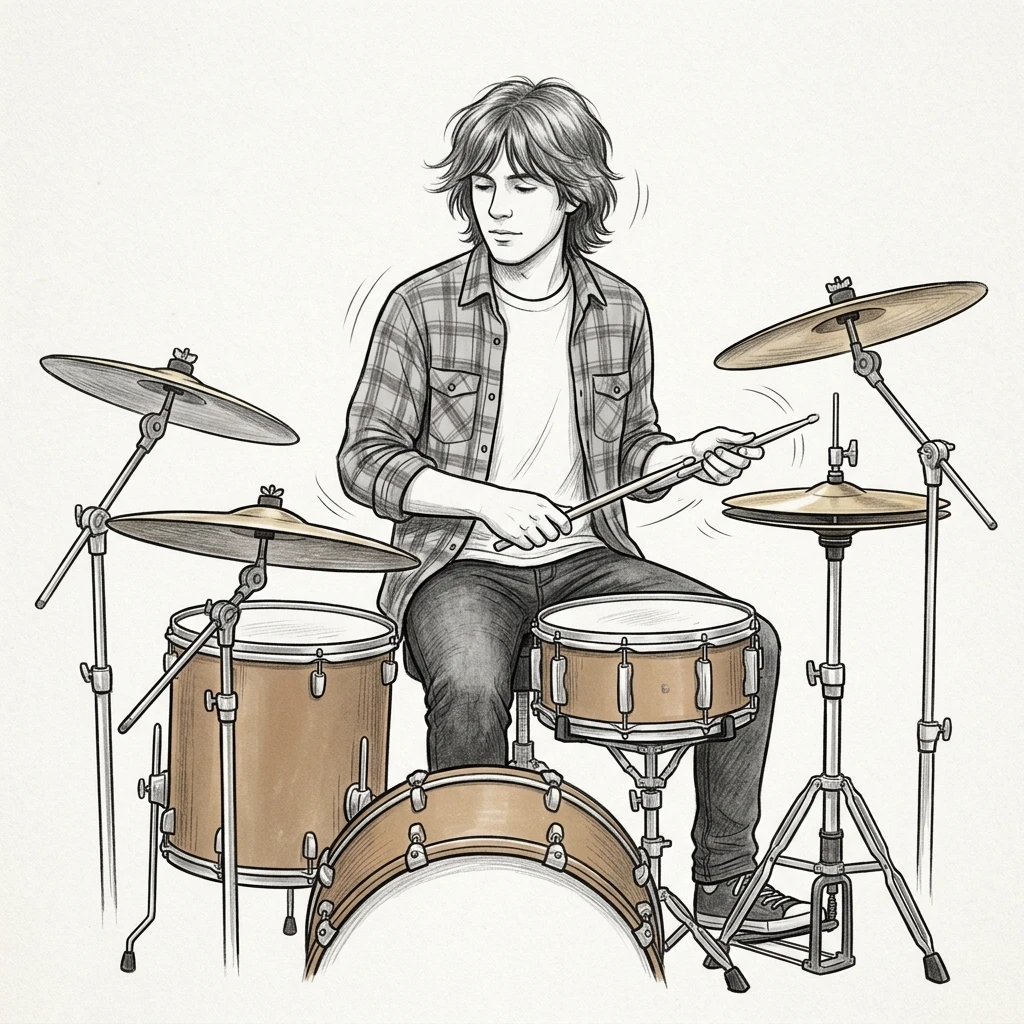
About the drummer
Alan White is an English drummer best known as the long-serving member of the Britpop band Oasis from 1995 to 2004. Replacing original drummer Tony McCarroll just before the recording of (What's the Story) Morning Glory?, White brought a sophisticated, swing-infused feel and technical versatility to the group's sound. His smooth groove, expressive hi-hat work, and subtle jazz-influenced touch were fundamental to shaping Oasis’s biggest anthems during the peak of their global success.
Drum It Original
Drum It Simplified
 Drum It Original
Drum It Simplified
Drumming style
Alan White’s playing style bridges classic British rock with a nuanced, jazz-influenced feel. Unlike traditional hard-hitting rock drummers, White emphasizes touch, dynamic control, and organic groove. His signature approach often incorporates subtle ghost notes, intricate hi-hat work, and light rimshots that add movement and depth to song arrangements without overpowering the acoustic guitars or vocal melodies. White frequently uses syncopated snare placements and delicate shuffle or swing feels, as heard on ballads like Wonderwall. At the same time, he can drive high-energy anthems with precise backbeats and explosive tom fills. His ability to blend pop sensibility with musical sophistication makes his drum parts both memorable and highly educational for drummers.
Swung Hi-Hat Patterns — Infuses standard pop and rock 4/4 beats with a subtle swing or shuffle feel that adds bounce and movement.
Subtle Ghost Notes — Uses soft, unaccented snare strikes between main beats to create texture and keep grooves fluid.
Dynamic Snare Modulation — Shifts seamlessly between delicate light-stick work on ballads and powerful rimshots on chorus climaxes.
Ride Cymbal Orchestration — Frequently incorporates ride bell accents and controlled wash to drive section transitions smoothly.
Musical Fill Placement — Keeps drum fills melodic and concise, using short rolls and tom sweeps that complement vocal phrasing rather than interrupting it.
Practice room
Studying White teaches drummers how to inject a laid-back, swinging feel into straight rock grooves.
Practice: Practice playing a standard 8th-note hi-hat groove while slightly delaying the offbeats to create a subtle shuffle.
Learn how to support soft acoustic arrangements without overplaying.
Practice: Practice playing basic 4/4 patterns at low volume, focusing on consistent, quiet hi-hat and ghost note levels.
Observe how White uses simple crescendo fills and ride bell accents to build energy into choruses.
Practice: Practice transitioning from hi-hat to ride cymbal while gradually increasing snare volume over two bars.
Master adding micro-grooves inside standard backbeats.
Practice: Practice placing a light ghost note on the subdivisions immediately after beat two on the snare drum.
Iconic tracks
Oasis
Features a famous, highly textured drum pattern with subtle ghost notes, swung hi-hats, and delicate dynamics that elevate the acoustic arrangement. Studying this track helps drummers learn how to play with touch and delicacy in a pop-rock ballad.
Drum this partOasis
Begins with an iconic snare intro roll and builds into a classic, driving rock beat with punchy tom fills. It serves as a great study in building song dynamics from verse to chorus.
Drum this partOasis
Demonstrates White’s ability to weave spatial cymbal work, warm tom accents, and expansive grooves through a long, atmospheric track. Studying it teaches patience and texture in slow-tempo rock drumming.
Oasis
Features a heavy, breakbeat-inspired groove with syncopated bass drum hits and tight snare work. It provides an excellent lesson in modern loop-style groove playing on an acoustic kit.
The story
Born in Eltham, London, in 1972, Alan White began playing drums at a young age, influenced by his musical family, including his older brother Steve White, the acclaimed drummer for Paul Weller. White developed a versatile technical foundation rooted in jazz, R&B, and classic rock. In the early 1990s, he gained professional experience performing with the alternative rock group Starclub and working as a studio session musician in London.
White’s major breakthrough came in April 1995, when Noel Gallagher invited him to join Oasis following the departure of original drummer Tony McCarroll. White stepped into the studio almost immediately to record the band’s historic second album, (What's the Story) Morning Glory?. His distinctive drumming elevated tracks such as Wonderwall, Don't Look Back in Anger, and Champagne Supernova, helping propel the album to global multi-platinum status.
White remained with Oasis for nearly a decade, contributing to major studio releases including Be Here Now (1997), Standing on the Shoulder of Giants (2000), and Heathen Chemistry (2002), alongside extensive world tours. He departed the band in early 2004, leaving behind an enduring legacy as a key architect of the Britpop era sound.
Drummer Tube is an independent educational platform and is not affiliated with, endorsed by, or sponsored by Alan White, Oasis, Starclub or any related artists. All artist names, song titles and trademarks belong to their respective owners and are used for identification and educational purposes only.