
 Drum It Original
About the drummer
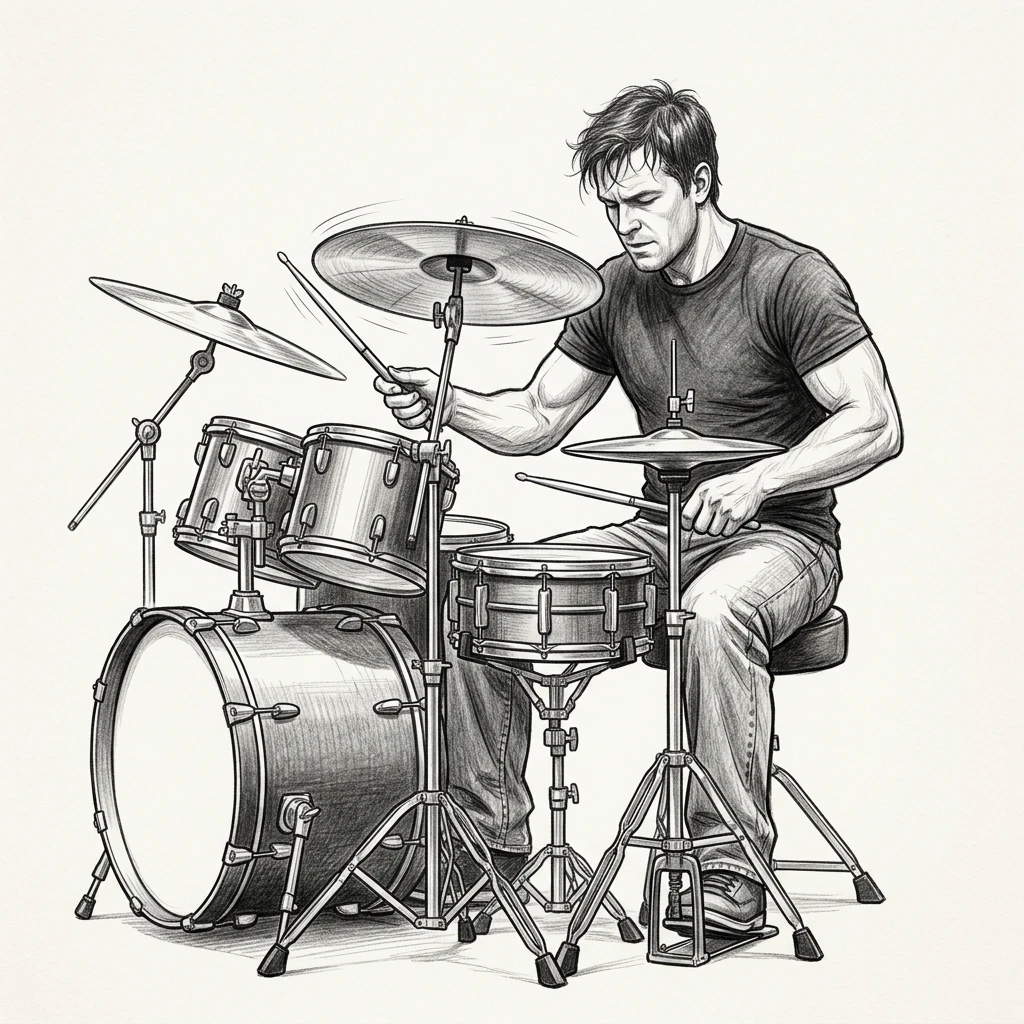
Brad Wilk is an American drummer best known as a founding member of Rage Against the Machine and Audioslave. Emerging in the early 1990s, Wilk gained recognition for his hard-hitting, groove-focused drumming that seamlessly blends heavy rock power with hip-hop and funk dynamics. His tight collaboration with bassist Tim Commerford established one of modern rock's most formidable rhythm sections. Beyond his core bands, Wilk played drums on Black Sabbath's studio album 13 and performed with supergroup Prophets of Rage, cementing his status as a defining drum voice in modern alternative metal.
Drum It Original
Drum It Simplified
 Drum It Original
Drum It Simplified
Drumming style
Brad Wilk’s drumming style centers on a heavy pocket, precise timing, and unyielding groove. Rather than relying on fast fill-work or complex double-bass technique, Wilk focuses on serving the song through solid, authoritative backbeats and dynamic control. His grooves draw heavily from funk and hip-hop rhythms, characterized by crisp rimshots, nuanced hi-hat openings, and kick drum patterns that lock tightly into the bassline.
Wilk frequently uses ghost notes and selective accenting to give heavy rock riffs a bouncy, syncopated feel without sacrificing sheer volume. During high-energy sections, he often transitions to crash-riding to create a massive wall of sound. His minimalist approach demonstrates how restraint, space, and rock-solid timekeeping can elevate a band’s overall impact.
Consistently striking loud rimshots on beats two and four to deliver maximum snare projection in dense guitar mixes.
Opening and quickly choking the hi-hat on offbeats to add a syncopated hip-hop feel to rock grooves.
Locking the bass drum pattern directly to bass guitar lines, creating a unified low-end punch.
Leaving intentional gaps between beats rather than playing dense fills, giving guitar riffs room to breathe.
Riding heavy crash cymbals during choruses to build massive sonic momentum while maintaining a steady snare pocket.
Practice room
Studying Wilk shows how staying right in the center of the beat gives heavy songs their weight.
Practice: Play a simple 4/4 rock groove along to a metronome, focusing on keeping every snare velocity and kick placement perfectly consistent.
Learn to align bass drum patterns directly with bass guitar accents to create a heavy foundation.
Practice: Take a bass guitar line from a rock song and write a kick drum pattern that hits every main bass accent.
Enhance groove texture using controlled hi-hat openings.
Practice: Practice alternating tight, closed hi-hat notes on main beats with slight openings on the offbeats to add bounce to your pattern.
Learn when to keep fills simple so the song retains momentum.
Practice: Restrict your fills to one-beat setup hits on the snare or floor tom at the end of four-bar phrases instead of rolling across the whole drum set.
Iconic tracks
Rage Against the Machine (Evil Empire, 1996)
Features a hip-hop-inspired rock beat with sharp hi-hat barks and tight kick-snare syncopation. Studying it shows how subtle hi-hat work can transform a heavy rock riff.
Drum this partAudioslave (Audioslave, 2002)
Opens with explosive cymbal crashes and moves into a relentless, driving backbeat. Studying it teaches how to maintain energy and power in straight-ahead rock tempos.
Drum this partRage Against the Machine (Rage Against the Machine, 1992)
Masterclass in building dynamic tension, shifting from a laid-back funk groove to aggressive chorus driving. Studying it illustrates dynamic control across structural transitions.
Rage Against the Machine (Rage Against the Machine, 1992)
Features rapid kick-drum placement mirroring the bassline and abrupt tempo shifts. Studying it demonstrates tight interaction between bass guitar and kick drum.
Black Sabbath (13, 2013)
Shows Wilk adapting his heavy pocket to slow doom metal tempos. Studying it provides insight into spacious play and heavy, deliberate timekeeping.
The story
Brad Wilk was born in Portland, Oregon, in 1968, and raised in Chicago and Southern California. He began playing drums around age 13, influenced by classic rock and funk musicians. Wilk’s professional recording career started in 1989 with the hard rock band Lock Up, which released the album Something Bitchin' This Way Comes.
After Lock Up disbanded, Wilk auditioned for guitarist Tom Morello. The duo teamed up with vocalist Zack de la Rocha and bassist Tim Commerford to form Rage Against the Machine in 1991. The band achieved massive global success across the 1990s with their fusion of rap, funk, and metal, releasing four acclaimed studio albums.
When Rage Against the Machine paused in 2000, Wilk, Morello, and Commerford joined former Soundgarden frontman Chris Cornell to form Audioslave. The supergroup released three platinum-selling studio albums between 2002 and 2006. In 2013, legendary metal band Black Sabbath recruited Wilk to play drums on their final studio album, 13. He later performed with Prophets of Rage from 2016 to 2019 and toured with alternative rock bands like The Smashing Pumpkins. Throughout his career, Wilk has maintained a reputation as one of rock’s most dependable groove drummers.
Drummer Tube is an independent educational platform and is not affiliated with, endorsed by, or sponsored by Brad Wilk, Rage Against the Machine, Audioslave or any related artists. All artist names, song titles and trademarks belong to their respective owners and are used for identification and educational purposes only.