
 Drum It Original
About the drummer
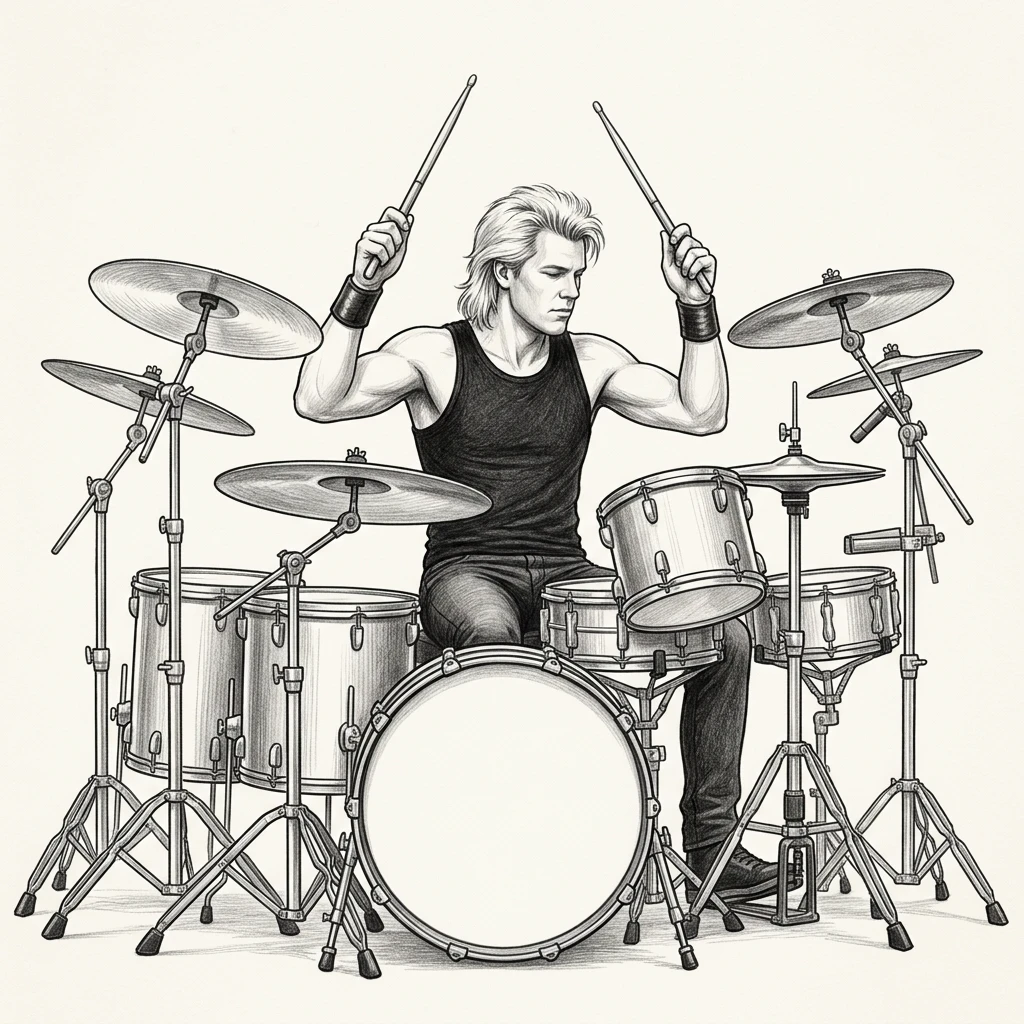
Matt Sorum is an American rock drummer best known for his work with Guns N' Roses and the supergroup Velvet Revolver, as well as his tenure with British rock band The Cult. Renowned for his powerful backbeat, precise timing, and arena-ready drum tones, Sorum stepped into Guns N' Roses during the recording of the massive Use Your Illusion albums. His authoritative playing style, dramatic tom transitions, and metronomic stability helped define hard rock drumming in the 1990s and 2000s, leading to his induction into the Rock and Roll Hall of Fame in 2012.
Drum It Original
Drum It Simplified
 Drum It Original
Drum It Simplified
 Drum It Original
Drum It Simplified
 Drum It Original
Drum It Simplified
Drumming style
Matt Sorum’s drumming style centers on power, precision, and structural clarity. He favors a heavy-hitting, metronomic approach that grounds high-energy hard rock tracks while giving sprawling rock ballads a grand, cinematic foundation. Sorum’s groove relies on a solid snare backbeat, clean kick drum placement, and a driving quarter-note or eighth-note hi-hat feel. Rather than filling space with intricate ghost notes or complex linear fusion chops, he utilizes clear tom rolls and signature repeating fill motifs to signal major section changes. His playing emphasizes dynamic buildup, unshakeable timing, and a muscular pocket designed to project clearly in large arenas.
Employs distinct, repeating descents across rack and floor toms to signpost transitions into main choruses.
Hits the snare with deliberate rimshot force, keeping an unyielding, reliable pocket across long song structures.
Gradual volume and accent builds across verse-chorus transitions to elevate long-form rock arrangements.
Aligns simple bass drum patterns strictly with bass guitar root notes for maximum low-end impact.
Uses strong, straightforward hi-hat accents to maintain momentum without cluttering heavy guitar riffs.
Practice room
Learn how to use consistent musical cues to guide listeners through complex song arrangements. Study Sorum's repeating tom motifs and practice applying a recognizable fill pattern before each chorus in a song.
Improve backbeat power and metronomic stability in heavy rock grooves.
Practice: Practice playing standard 4/4 rock beats to a metronome at slow-to-medium tempos, focusing on uniform snare rimshot dynamics.
Learn to build dynamic intensity over long bridges and solos without altering the tempo.
Practice: Practice building a tom fill from very soft to maximum volume over eight bars while keeping strict metronome time.
Discover how simpler, punchier drum parts project better than busy, crowded patterns.
Practice: Practice removing unnecessary filler notes from a groove to make the primary kick and snare hits sound larger.
Iconic tracks
Guns N' Roses (Use Your Illusion I)
Features a famous recurring tom fill motif that anchors the epic ballad's major section transitions. Studying this part demonstrates how repeating a thematic fill can define a song's arrangement.
Drum this partGuns N' Roses (Use Your Illusion I)
Showcases Sorum's heavy pocket, smooth crash accenting, and steady tempo control on a power ballad. Drummers can learn how to balance rock weight with melodic sensitivity.
Drum this partGuns N' Roses (Use Your Illusion II)
A high-energy hard rock performance driven by a relentless kick pattern and aggressive hi-hat work. studying it helps build stamina and groove drive at faster rock tempos.
Velvet Revolver (Contraband)
Driven by a heavy, swinging rock beat and crisp snare accents that lock tightly with the bassline. Studying this track teaches drummers how to lay down a modern, muscular rock groove.
Guns N' Roses (Use Your Illusion II)
Demonstrates broad dynamic control, tasteful crash accents, and steady quarter-note hi-hat pulsing. It offers a lesson in backing a classic anthem cleanly without overplaying.
Drum this partThe story
Born in Long Beach, California, in 1960, Matt Sorum began playing drums in his youth, drawing influence from classic rock powerhouse players. He honed his skill across the Los Angeles music scene during the 1980s, recording with the band Hawk and touring with Y&T. His major break arrived in 1989 when he joined English rock band The Cult as their touring drummer for the Sonic Temple world tour.
Impressed by his powerful performance, Slash and Duff McKagan invited Sorum to join Guns N' Roses in 1990 to replace original drummer Steven Adler. Sorum recorded the multi-platinum albums Use Your Illusion I and II (1991) and "The Spaghetti Incident?" (1993), touring extensively around the globe on the historic Use Your Illusion tour.
After leaving Guns N' Roses in 1997, Sorum co-founded the rock supergroup Velvet Revolver in 2002 alongside Slash, McKagan, Scott Weiland, and Dave Kushner. The band achieved massive commercial success with their debut album Contraband (2004). Throughout his career, Sorum has also released solo projects, performed with Camp Freddy and Kings of Chaos, and built a legacy as one of hard rock's premier pocket drummers.
Drummer Tube is an independent educational platform and is not affiliated with, endorsed by, or sponsored by Matt Sorum, Guns N' Roses, Velvet Revolver or any related artists. All artist names, song titles and trademarks belong to their respective owners and are used for identification and educational purposes only.