
 Drum It Original
About the drummer
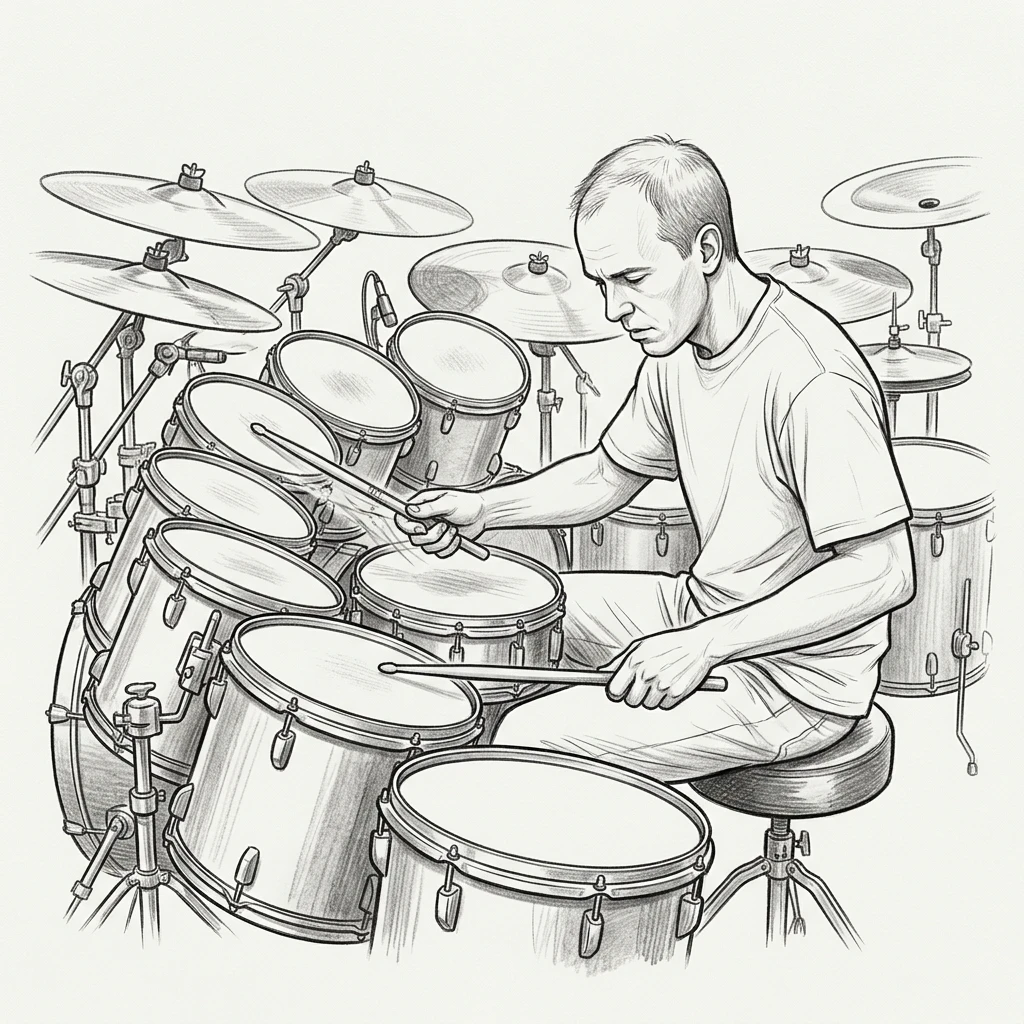
Phil Collins is an iconic English drummer, singer, and songwriter best known as the powerhouse drummer and frontman of the progressive rock turned pop band Genesis, as well as a massively successful solo artist. Renowned for his explosive fills, flawless timing, and innovative use of studio technology, Collins redefined rock drumming in the 1970s and 1980s. Beyond Genesis, his work with fusion group Brand X and extensive session appearances established him as one of the most versatile, influential, and sound-defining drummers in modern popular music history.
Drum It Original
Drum It Simplified
 Drum It Original
Drum It Simplified
 Drum It Original
Drum It Simplified
 Drum It Original
Drum It Simplified
 Drum It Original
Drum It Simplified
Drumming style
Phil Collins combines progressive rock complexity with deep, infectious pop and R&B grooves. As a left-handed drummer playing a left-handed kit setup, his physical motion gives his fills a distinct voice and powerful projection. Collins is celebrated for his punchy, melodic tom orchestrations and powerful dynamic shifts, moving seamlessly from subtle ghosted snare grooves to explosive, arena-filling accents. His timekeeping is rock-solid, characterized by a crisp hi-hat feel, tight bass drum placement, and an acute sense of space. Rather than cluttering songs with unnecessary notes, Collins plays with immense intentionality, using sharp accents, syncopated snare placements, and big tonal colors to drive the music forward while enhancing the melodic arrangements around him.
Gated Reverb Sound — Championed heavy ambient drum compression with abrupt digital noise gates, creating a massive, atmospheric drum sound without long decay tails.
Melodic Tom Fills — Frequently uses single-headed concert toms tuned to clear pitches, creating soaring tom sequences across the kit instead of standard snare-to-floor-tom cascades.
Left-Handed Setup and Power — Plays a full left-handed kit setup, leading fills with his left hand to create unique sticking patterns and powerful open-handed accents.
Dynamic Space and Tension — Masterfully holds back drum entries until dramatic moments, building anticipation before releasing energy with sudden, powerful drum entrances.
Syncopated Hi-Hat and Snare Grooves — Blends clean R&B backbeats with subtle ghost notes and off-beat hi-hat openings to give pop grooves a driving, danceable feel.
Practice room
Learn how to withhold the drum entrance to maximize a song's emotional release. Studying Collins helps drummers understand how staying quiet or using simple electronic textures makes live drums hit harder.
Practice: Practice playing along to a track without drum entrances, focusing on hitting the first entrance note with absolute precision and conviction.
Develop melodic awareness across the tom drums. Collins treats toms like melodic instruments rather than simple noise generators.
Practice: Practice playing four-bar fill phrases using only toms, striving to create a catchy, sung melodic shape rather than fast rudimental patterns.
Build smooth, natural-sounding grooves in non-standard time signatures. Collins' work with Brand X and early Genesis shows how to make complex meters feel relaxed.
Practice: Practice looping a 7/8 or 5/4 groove with a steady hi-hat pulse, aiming to keep your feel relaxed and musical.
Improve groove clarity and pocket control. Collins drew heavily from Motown and Stax drummers to create crisp backbeats.
Practice: Practice a standard 4/4 pop groove at medium tempo, focusing on consistent snare backbeat placement and sharp hi-hat accents on off-beats.
Iconic tracks
Phil Collins (Studio Version, Face Value, 1981)
Features one of the most famous drum fills in music history, transitioning from a simple Roland CR-78 pattern into a massive, gated-reverb tom cascade. Teaches the dramatic power of silence, patience, and impactful entrance timing.
Drum this partPhilip Bailey & Phil Collins (Studio Version, Chinese Wall, 1984)
A driving, high-energy pop-rock groove anchored by punchy fills, crisp hi-hat work, and rock-solid timekeeping. Teaches how to push the energy of a song with active snare fills while maintaining an unshakable pocket.
Drum this partGenesis (Studio Version, Genesis, 1983)
Features a shuffling, syncopated beat with subtle hi-hat work and crisp snare accents that drive the song's rhythmic bounce. Teaches how to play a relaxed, swing-influenced pop groove with dynamic precision.
Drum this partGenesis (Studio Version, Selling England by the Pound, 1973)
Demonstrates elite progressive rock drumming during a famous keyboard solo set in 7/8 time, featuring fluid ride cymbal work and complex phrasing. Teaches how to maintain a comfortable, melodic feel over odd-meter time signatures.
Brand X (Studio Version, Unorthodox Behaviour, 1976)
High-speed, highly technical jazz fusion playing filled with blazing hand-foot combinations, syncopated ride patterns, and intricate time shifts. Teaches rapid physical agility and precision phrasing in fusion drumming.
The story
Born in London in 1951, Phil Collins began playing drums as a child, developing his foundation through theatrical performances, big band jazz, and R&B. He entered the professional music scene in the late 1960s with the rock band Flaming Youth before joining Genesis in 1970. With Genesis, Collins helped define progressive rock drumming on seminal albums like Foxtrot and Selling England by the Pound.
In the mid-1970s, he co-founded the jazz fusion band Brand X, showcasing his technical virtuosic side through complex odd-meter grooves. When lead singer Peter Gabriel left Genesis in 1975, Collins stepped up as lead vocalist while continuing to record complex drum tracks in the studio. During the 1980s, Collins launched a hugely successful solo career, producing hits like "In The Air Tonight," which famously pioneered the heavily compressed, gated-reverb drum sound. He also became a highly sought-after session drummer, playing with Eric Clapton, Robert Plant, Philip Bailey, and Howard Jones, cementing his legacy as a master of both musical complexity and pop drumming sensibility.
Drummer Tube is an independent educational platform and is not affiliated with, endorsed by, or sponsored by Phil Collins, Genesis, Brand X or any related artists. All artist names, song titles and trademarks belong to their respective owners and are used for identification and educational purposes only.