

 Drum It Original
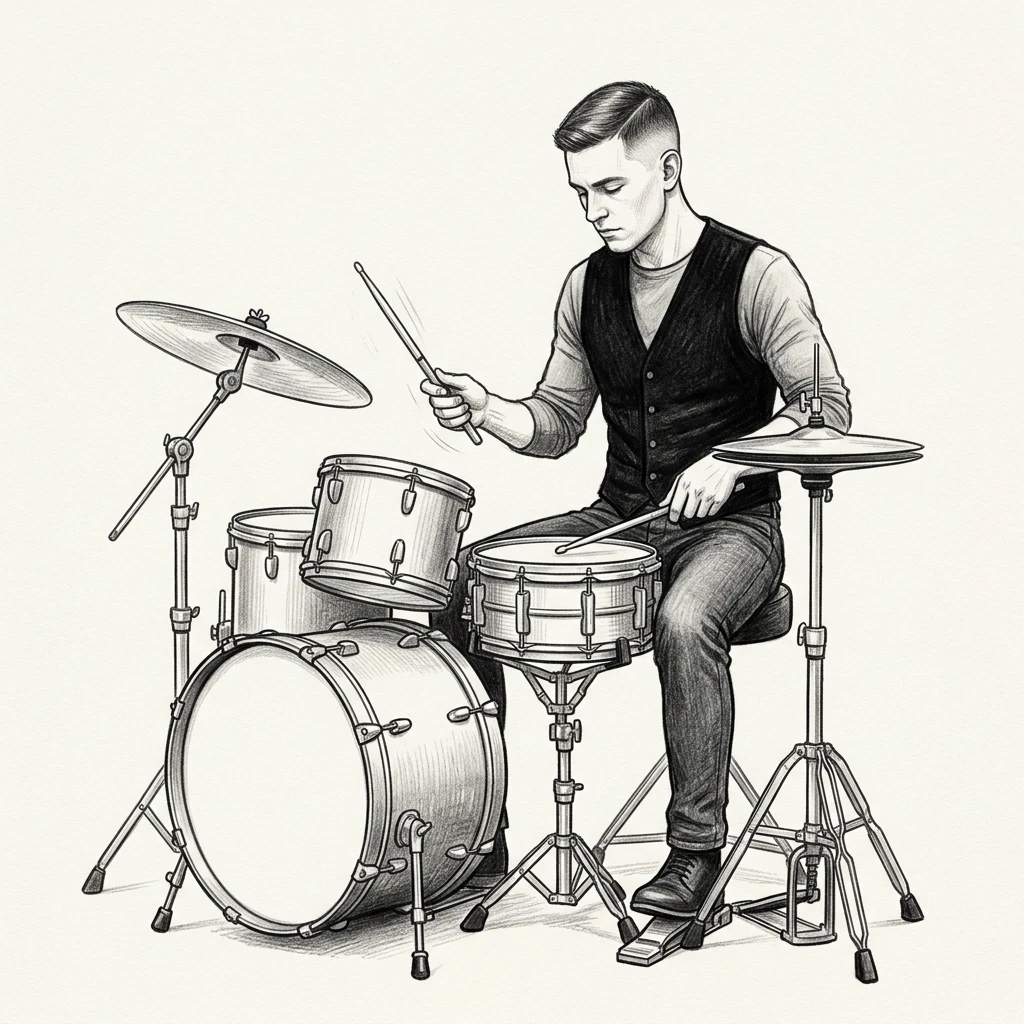
About the drummer
Larry Mullen Jr. is the co-founder and drummer of the legendary Irish rock band U2. Formed in Dublin in 1976 after Mullen posted a notice on his school bulletin board, U2 became one of the most successful acts in music history. Mullen's drumming is distinguished by its crisp, marching-band-inspired snare rhythms, metronomic stability, and unselfish musicality. Rather than relying on conventional rock fill tropes, his playing emphasizes tom-heavy grooves, electronic integration, and precise dynamic control, providing the powerful emotional foundation for U2's anthemic sound.
Drum It Original
Drum It Simplified
 Drum It Original
Drum It Simplified
 Drum It Original
Drum It Simplified
Drumming style
Larry Mullen Jr.’s drumming style is defined by discipline, military precision, and rhythmic economy. Influenced by early marching band training, he frequently utilizes crisp snare roll patterns and sixteenth-note articulation to drive tracks forward without relying on traditional hi-hat or ride cymbal timekeeping. He often shifts the main groove to the floor tom and rack toms, creating a deep, resonant backdrop that allows space for atmospheric guitars and basslines. Mullen embraces hybrid drumming, seamlessly blending acoustic drum kits with electronic loops, click tracks, and percussion samples. His dynamic awareness and focus on song structure make every stroke count.
Utilizes crisp, march-influenced snare accenting, flams, and sixteenth-note roll figures to drive the tempo rather than relying solely on cymbals.
Replaces traditional hi-hat or ride cymbal patterns with steady rhythmic patterns played across the rack and floor toms.
Seamlessly layers live acoustic drumming over electronic loops, percussion tracks, and click tracks without losing organic feel.
Focuses on serving the song structure, often omitting complex drum fills in favor of steady, atmospheric grooves that leave room for vocal and guitar delays.
Uses unique limb placement and unexpected accent choices to give simple rock beats an unmistakable, recognizable hook.
Practice room
Studying Mullen helps drummers build clean snare articulation without depending on heavy cymbal crashing.
Practice: Practice playing sixteenth-note snare patterns along with a metronome while strictly controlling dynamic accents on specific offbeats.
Studying Mullen's work teaches how to lock solid acoustic grooves to electronic backing tracks.
Practice: Practice playing standard rock beats along with a electronic percussion loop, focusing on dead-center alignment with the click.
Mullen shows that space and restraint create impact.
Practice: Practice playing through a full song verse using only kick drum, snare drum, and floor tom, building momentum without adding extra fills.
Analyzing his tom-heavy grooves helps drummers expand their palette for timekeeping options.
Practice: Practice taking a standard hi-hat eighth-note pattern and transferring the right-hand movement entirely to the floor tom.
Iconic tracks
Features a iconic, march-style snare drum pattern with crisp accents and flams recorded in a resonant stairwell. Studying this track shows how a snare pattern can serve as the primary hook of a hit song.
Features a driving tom intro and tight, accented hi-hat work that propels the anthemic tempo. Drummers can learn how to build dynamic intensity into an arena-rock chorus.
Blends an understated electronic drum machine loop in the verse with a powerful acoustic kit entry in the chorus. Studying this part demonstrates effective arrangement transitions between electronic textures and live acoustic drums.
Uses a steady, building beat that locks in with delay-drenched guitar arpeggios. Studying this performance highlights how a simple, rock-solid rhythm provides stability for complex instrumental delay effects.
The story
Born in Dublin, Ireland, in 1961, Larry Mullen Jr. began playing drums at age nine after brief piano studies. In September 1976, he posted a now-famous note on the noticeboard of Mount Temple Comprehensive School looking for musicians to form a band. That group eventually became U2, launching one of the longest-running, unchanged line-ups in rock history.
As U2's drum engine, Mullen developed a signature martial snare sound on early albums such as Boy (1980) and War (1983). As the band evolved through the late 1980s and 1990s, he broadened his palette on landmark records like The Joshua Tree (1987) and Achtung Baby (1991), integrating click tracks, drum loops, and industrial percussion with traditional acoustic drums.
Outside of U2, Mullen famously collaborated with bandmate Adam Clayton to re-record the 'Theme from Mission: Impossible' in 1996, creating an international top-ten hit. He has also contributed session drums to records by artists such as Emmylou Harris, Nanci Griffith, and Daniel Lanois. Inducted into the Rock and Roll Hall of Fame in 2005, Mullen remains celebrated for his foundational contribution to modern rock drumming.
Drummer Tube is an independent educational platform and is not affiliated with, endorsed by, or sponsored by Larry Mullen Jr., U2, Adam Clayton & Larry Mullen Jr. or any related artists. All artist names, song titles and trademarks belong to their respective owners and are used for identification and educational purposes only.